September 30, 2026
A driveway does more than connect a home to the street. It occupies a large part of the front yard, carries daily traffic, and affects where rainwater goes when a storm arrives. On a conventional hard surface, water generally moves across the pavement toward a lower area. Permeable pavers offer another approach: they create a usable driveway while allowing rain to enter the pavement through openings between the units.
The effect depends on far more than the appearance of the pavers. Joint material, the layers beneath the surface, and conditions on the property all influence where the water travels next. For a homeowner considering a new driveway, those details are worth discussing with a local hardscaping contractor before settling on a pattern or color.
How Do Permeable Pavers Work?
Many permeable pavers are solid units placed with carefully designed spaces between them. Rather than filling those joints with dense sand, the installation uses clean, small stone that leaves room for water to pass through. Rain enters the openings and moves into layers of open-graded stone beneath the surface. That stone provides temporary storage while the water moves into the underlying soil or follows another route provided by the design.
This is why a paver driveway is not automatically permeable. Two surfaces may look alike, yet tightly packed joints and a dense base can make one shed water while the other accepts it. The pavers, joint fill, and base have to work together; changing the surface material alone will not create the same effect. Understanding that distinction helps homeowners evaluate the driveway as a complete system.
Why Does the Water's Route Matter?
During a downpour, runoff from an impervious driveway may reach a walkway, planting bed, or street in a concentrated flow. A permeable surface gives some of that rain a path downward where it lands. Depending on the site and the driveway's design, this can reduce the amount of water traveling over the surface at one time. How much runoff stays out of adjoining areas depends on the conditions below the pavers.
There are limits to what any driveway can accomplish. Permeable paving cannot absorb unlimited rain or resolve a drainage problem originating elsewhere on a property. Water must have a suitable place to go after it passes through the joints, and the answer varies with soil and grading. Rather than relying on surface appearance alone, a local hardscaping contractor can assess how the proposed driveway fits the property's existing drainage patterns.
Which Property Conditions Affect the Design?
Soil is one of the first considerations. Where water moves slowly into the ground, the stone below the pavers may need a designed route for excess flow. Slope matters as well: water from higher areas can enter the driveway, while runoff at the edges must still be considered. Nearby structures and paved surfaces help determine how much rain the driveway may receive and where it can move afterward. If runoff from another paved area reaches the driveway, the design must account for more than the rain falling directly on its surface.
The location of the garage, street connection, and front walk also shapes the plan. A driveway may need to accommodate a turn into a parking area or provide a comfortable approach to the entrance. These everyday uses affect its dimensions and layout, not just its visual design. Discussing the whole site with a local hardscaping contractor helps connect water movement with the way people and vehicles use the space.
Can a Permeable Driveway Complement the House?
Drainage performance does not require a plain-looking surface. Pavers come in different shapes, colors, and arrangements, allowing the driveway to relate to the home's exterior. A border can define its edges, while a considered pattern can give a wide paved area some visual structure. These details matter because the driveway is often one of the most visible parts of the property.
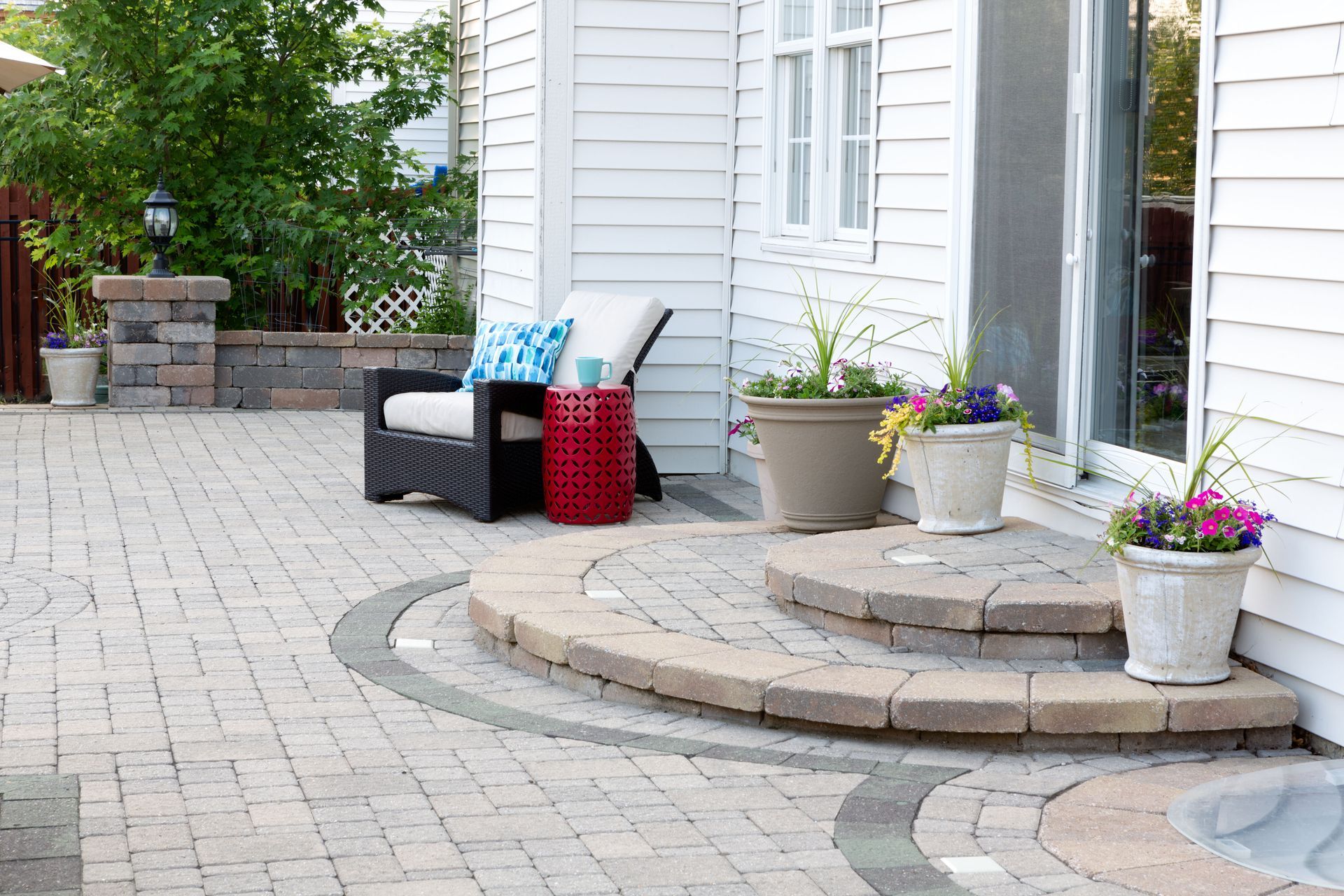
Existing patios and walkways may offer useful cues without requiring an exact match. Related tones can make the outdoor areas feel connected even when each has a different pattern and purpose. The selection still has to suit a driveway built for vehicles and rainfall, so appearance cannot be the only consideration. Working through those choices with a local hardscaping contractor can keep the desired look connected to the driveway's function.
What Supports the Pavers and Vehicles?
Below the visible surface, the open stone base has two jobs: hold incoming water temporarily and support the driveway's regular use. Its design must account for the expected vehicles as well as the ground beneath it. Edges and joints also matter because pavers need to remain stable without closing the openings that admit water. A durable surface depends on these parts functioning together.
The demands on a driveway used mainly by passenger cars may differ from those of a space that regularly receives heavier vehicles. Where cars turn or park repeatedly also affects which portions of the paving carry the most traffic. That does not rule out permeable paving, but it makes a single standard design less useful. Expected traffic is another point to discuss with a local hardscaping contractor when selecting pavers and planning the structure beneath them. The goal is a firm parking and driving area that continues to let rain enter its intended path.
What Maintenance Does the Surface Need?
Over time, leaves, soil, and fine debris may accumulate in the joints. If those openings become clogged, water may linger on the surface instead of moving through it as readily. Periodic attention to debris and the condition of the joints helps preserve the driveway's drainage function. Any cleaning should suit the particular paving system so that the open joints remain effective. Watching how the surface responds during rain can help reveal a change before standing water becomes a recurring issue.
Surface protection raises a different question. According to This Old House, sealing concrete pavers can reduce staining and fading, with another application generally considered after three to five years depending on traffic and exposure. On a permeable driveway, however, a treatment must be compatible with the pavers and leave the drainage openings functional. Before choosing a treatment, homeowners can ask a local hardscaping contractor how surface care and maintenance of the open joints relate.
Is This Approach Right for the Driveway?
A homeowner may be drawn to permeable pavers because runoff from the current driveway creates recurring wet spots, or because a new driveway presents a chance to account for rain from the beginning. The look of a paver surface can be another reason to explore the option. Neither motivation establishes that a particular installation will perform well without considering the site. Soil, slope, vehicle use, and the available path for water all deserve attention.
The best design connects those conditions with the driveway's daily role and the surrounding outdoor space. That might mean selecting a pattern that suits the house while considering the front walk and the way vehicles enter the property. It also means understanding where rain will go after it disappears between the pavers. These are useful points to raise with a
local hardscaping contractor when comparing driveway options.
Permeable pavers can make the route rainwater takes part of the driveway's design while retaining the visual flexibility of a paver surface. Their suitability rests on the conditions beneath and around the finished driveway, as well as the demands placed on it. At Atlantic Outdoor Living, we design and install paver and permeable driveways that fit the surrounding outdoor space. We can discuss the conditions and design options for your property to help you choose a driveway that suits your needs.